Before You Sit Still, Move First: Why Your Nervous System Needs a Bridge to Meditation
Jun 16, 2026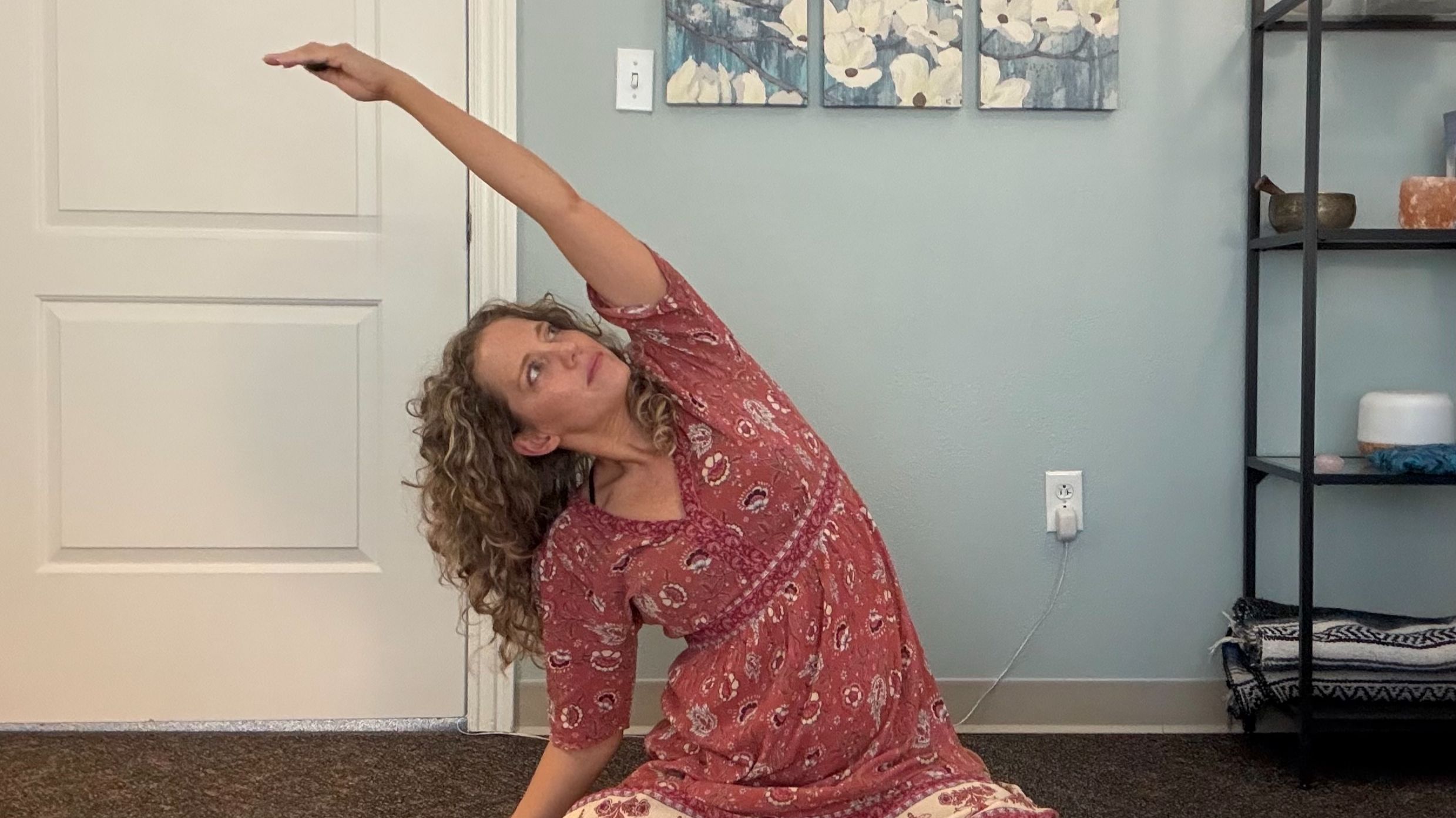
There's a common frustration I hear from people trying to meditate: "I sit down, close my eyes, and my mind just races even harder. Meditation just does not work for me."
There is a biological reason for this experience - it is important to find ways to discharge tension and stress before we can sit still in meditation.
When we've been running full speed in our busy overstimulating lives, it’s hard to expect our mind to get quiet and still in a meditation practice, without releasing that energy first.
Why You Can't Jump From Busy to Still
The nervous system doesn't have an off switch. It has a dial.
When we're activated — whether from stress, anxious energy, a long workday, or simply the accumulated pace of modern life — our sympathetic nervous system is engaged. Our heart rate is elevated, breath can be shallow, muscles are braced and the mind is scanning for what's next.
Meditation, at its core, is a parasympathetic activity. It asks the body to move into a state of feeling safe, to soften, and to let our attention go inward. But if you sit down in a sympathetically-activated state and try to force stillness, you're essentially pressing the gas and the brakes at the same time.
For people who are naturally more energetic, anxious, or who carry a lot of nervous system load, this gap is even wider.
What the body needs isn't stillness immediately. It needs support to transition from one nervous system state to the next.
Movement as Medicine for the Nervous System
Intentional, gentle movement — especially when synchronized with the breath — acts as a biological bridge between activation and rest.
Here's what's happening physiologically:
Synchronizing the breath with a movement activates the vagus nerve, which helps calm and regulate the nervous system.
Slow movement discharges residual activation by giving that tension somewhere to go. It completes the physiological stress cycle.
Rhythm creates regulation. Predictable, repetitive movement activates the brain's rhythmic processing, which is deeply settling for the nervous system.
Introducing the Seated Twist Sequence
One of my favorite ways to create this bridge is through what I call the Seated Twist Sequence — a gentle, accessible series of movements you can do in a chair or on the floor that warms the spine, opens the side body, and begins to invite the kind of soft, inward attention that meditation asks for.
You don't need a yoga mat. You don't need flexibility. You don't need experience.
What you need is willingness to slow down for a few minutes before you try to be still.
The sequence works by moving the spine in every direction — the kind of movement the spine craves and rarely gets in a day full of forward-facing sitting. Twisting has a particular benefit: it stimulates the vagus nerve.
When you move through it slowly, letting each exhale carry you a little deeper into the twist and each inhale lift you back through center, something begins to settle. The breath lengthens. The shoulders drop. The jaw unclenches.
By the time you finish the sequence and sit quietly, your mind can begin to still and settle.
How to Use This Practice
The Seated Twist Sequence is designed to be used as a bridge to prepare for meditation, but it's also powerful on its own as a 5-minute nervous system reset during the day.
A few principles to carry with you as you move:
Let the breath lead, not the body. Rather than pushing into the deepest range of motion you can reach, let each inhale and exhale guide how far you go. You're training your nervous system to follow breath — which is exactly what meditation asks for.
Go slower than feels natural. If you think you're going slowly enough, go slower. This is where the regulation actually happens — in the edges where you resist the urge to rush.
Notice sensation without trying to change it. You might notice tightness, warmth, resistance, or ease. All of it is information. This quality of curious, non-judgmental noticing is what we're cultivating for seated practice.
Repeat. A sequence of 3–5 slow rounds on each side, moving with breath, is enough to shift your physiological state.
For the People Who Say "I Can't Meditate"
If you've ever said that about yourself — or heard a client say it — I want to offer a reframe.
You're not bad at meditating. You haven't been given a bridge.
The idea that meditation means sitting perfectly still with a blank mind is one of the most persistent and unhelpful myths in wellness culture. Meditation is the practice of returning — returning to the breath, to the body, to the present moment. Again and again.
For that practice to take root, the body needs to feel safe enough to let attention rest. And for many of us, that safety is built through movement first.
Give your nervous system what it needs to arrive. Then stillness becomes possible — not as an achievement, but as a relief.
Watch the Full Sequence
I've filmed a full walkthrough of the Seated Twist Sequence on YouTube — a slow, guided practice you can follow along with before your next meditation session, or anytime you need to come back to yourself during the day.
Watch the Seated Twist Sequence on YouTube by clicking here.
And if you're curious about how somatic movement practices like this one can support your clinical work or your personal nervous system health, I'd love to have you explore what we offer. This is the heart of what I teach — helping therapists and helping professionals reconnect with their own bodies so they can help clients heal from trauma without burning out.
For more trauma informed tips, trainings and tools you can visit my website by clicking here.
Need more help?
Want to learn more about CE courses for mental health professions? Visit the course page below.
Stay Connected with Becca Odom Wellness
Join the newsletter for free resources, tools, and videos — plus, you'll be the first to know about upcoming Continuing Education (CE) trainings
We respect your privacy and never share your information. Unsubscribe anytime.