Burnout and Trauma Recovery
Mar 25, 2026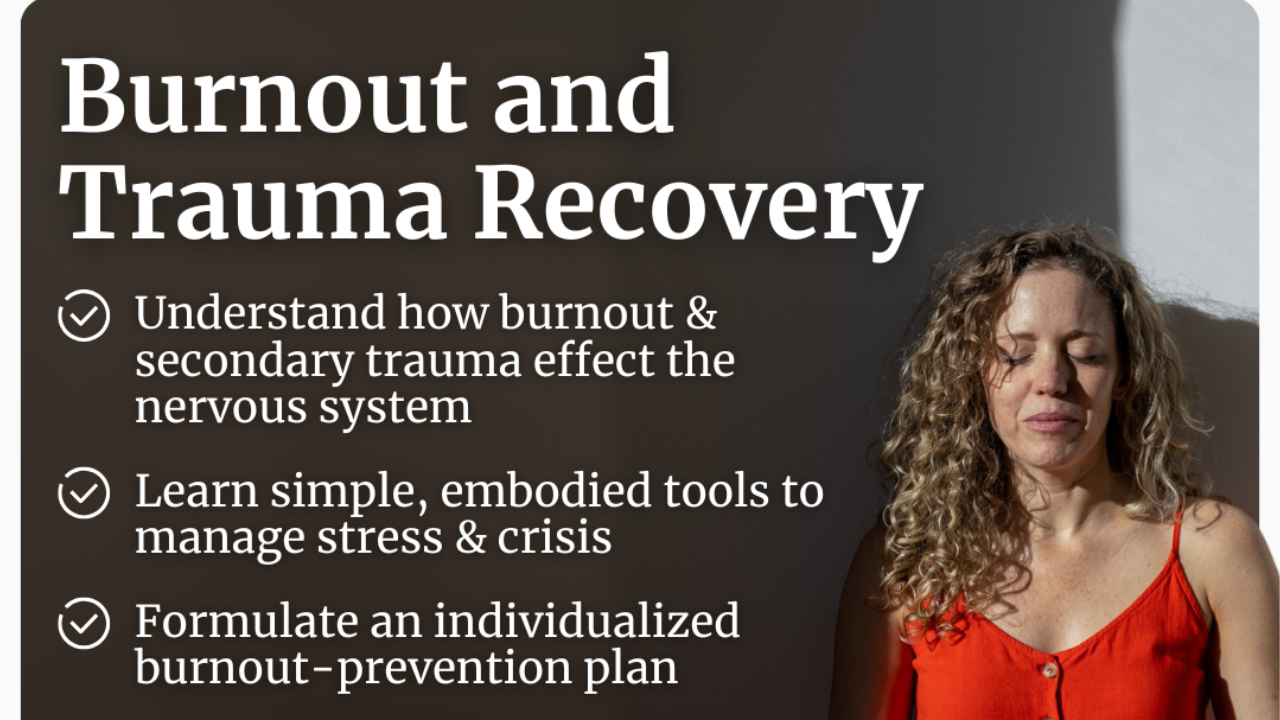
We chose this work because we care deeply. We show up for the people on our caseload — often before we show up for ourself. And somewhere along the way, caring deeply started to feel like carrying too much.
If you've found yourself emotionally numb after a long session, unable to shake a client's story at 2am, or running on obligation rather than purpose — you're not broken. You may be experiencing burnout, secondary trauma, or both. And your body has been trying to tell you for a while now.
What Is Burnout — Really?
Burnout is more than feeling tired. It's chronic depletion that develops when the demands placed on us consistently outpace our capacity to recover. In helping professions, this is almost inevitable without intentional support.
You might be experiencing burnout if you notice:
- Dreading sessions you once found meaningful
- Fatigue that doesn't lift with rest
- Emotional numbness or detachment from clients
- Irritability or a loss of empathy that feels foreign to you
- A creeping sense that nothing you do makes a difference
Secondary Trauma: When Their Pain Becomes Yours
Secondary traumatic stress is what happens when repeated exposure to clients' trauma begins to affect your own nervous system. This is not a character flaw. Your nervous system is designed to resonate with others' pain — it's part of what makes you gifted at this work.
But without adequate recovery, that resonance can leave lasting marks: intrusive thoughts, sleep challenges, hypervigilance, emotional withdrawal, a loss of hope that feels unfamiliar.
These are not signs of weakness. They are signs that your body has been absorbing more than it has been able to process.
Why "Just Rest More" Isn't Enough
Burnout and secondary trauma aren't problems of time management or willpower. Chronic stress exposure changes the nervous system — keeping your body stuck in fight, flight or freeze, even when you're no longer with a client. Days off alone won't rewire those patterns.
Recovery requires somatic, body-based practices that speak directly to the nervous system — tools that help you complete stress cycles, restore a felt sense of safety, and reconnect with who you are beyond your role.
Healing from burnout isn't about doing less. It's about learning to move through the world in a body that feels like home again.
A Somatic Approach to Recovery
Somatic trauma-informed work starts with a simple premise: the body is not a symptom to be managed — it's a pathway to healing.
Here are 4 pillars that can begin to shift your recovery:
- Regulation Before Reflection — Breath work, grounding, and gentle movement create the physiological conditions for real recovery, not just suppression.
- Completing the Stress Cycle — Stress needs to discharge from the body through movement, tears, social connection, or creative outlets — not just be pushed down to keep functioning.
- Reconnecting With Internal Resources — Somatic practices help you re-anchor to what feels grounding and nourishing, not just what numbs you.
- Boundaries as Nervous System Care — Learning to recognize when your body signals "no" is one of the most powerful forms of sustainability in this work.
You Deserve More Than Survival Mode
You deserve to thrive, not just endure. Recovery is possible — and with the right tools and support, you can find your way back to work that feels sustainable, meaningful, and even joyful.
You don't have to wait until you're completely empty to start.
Ready to Begin?
Burnout and Trauma Recovery is a live virtual training for helping professionals navigating the real, embodied effects of chronic stress and secondary trauma. You'll leave with practical somatic tools, a deeper understanding of your nervous system, and a renewed sense of what sustainable care looks like.
Join us on May 8th from 10:15 - 1:45 pm EST and earn 3 CEs in this live virtual training with Becca Odom LCSW.
You can learn more and register by clicking here.
You've held space for so many people. It's time to hold some for yourself.
Need more help?
Want to learn more about CE courses for mental health professions? Visit the course page below.
Stay Connected with Becca Odom Wellness
Join the newsletter for free resources, tools, and videos — plus, you'll be the first to know about upcoming Continuing Education (CE) trainings
We respect your privacy and never share your information. Unsubscribe anytime.